Click here for a list by category

Abstract
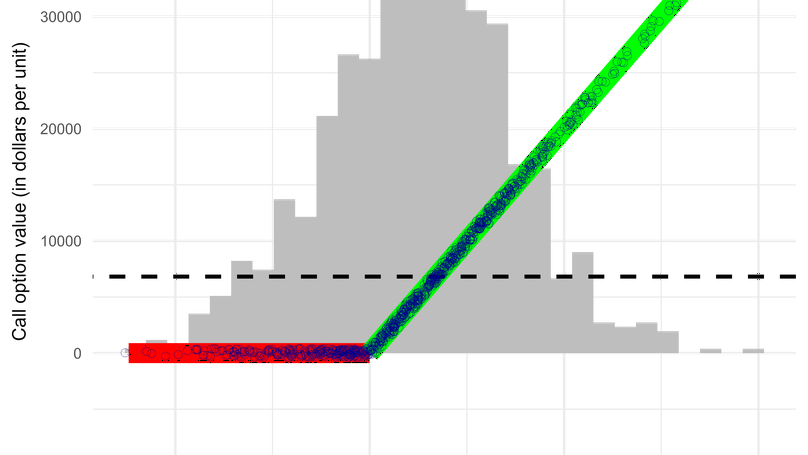
# Not sure what this one does, but for good measure: Valuing durable assets is essential for informed decisions on acquisitions, dispositions, budgeting, and borrowing, yet remains challenging due to illiquidity, heterogeneity, and subjective assessments. We propose a valuation model based on the no-arbitrage option pricing theory that outperforms traditional hedonic methods both in- and out-of-sample, remains robust under changing market conditions, and can price real options on durable assets. Our model has broad utility - detecting arbitrage, informing refinancing de-cisions, valuing collateral, and assessing whether securitized asset prices reflect underlying values. This forward-looking, market-sensitive approach addresses key limitations of conventional methods and improves decision-making across investment, lending, and financial reporting contexts.
Abstract
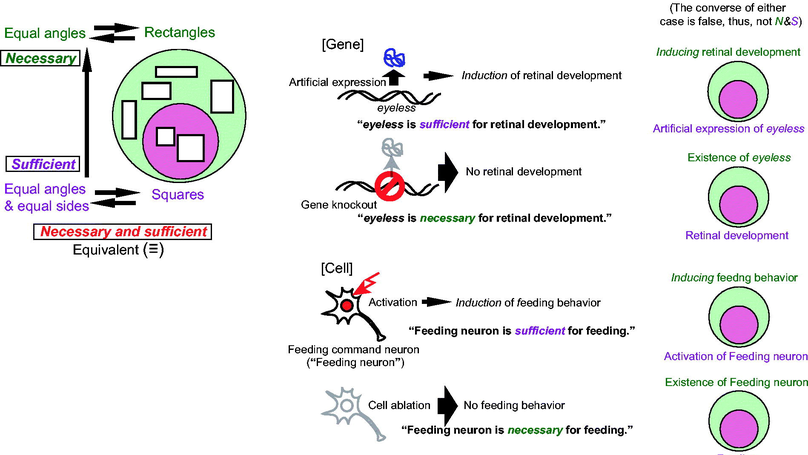
In this article, we describe an incorrect use of logic which involves the careless application of the ‘necessary and sufficient’ condition originally used in formal logic. This logical fallacy is causing frequent confusion in current biology, especially in neuroscience. In order to clarify this problem, we first dissect the structure of this incorrect logic (which we refer to as ‘misapplied-N&S’) to show how necessity and sufficiency in misapplied-N&S are not matching each other. Potential pitfalls of utilizing misapplied-N&S are exemplified by cases such as the discrediting of command neurons and other potentially key neurons, the distorting of truth in optogenetic studies, and the wrongful justification of studies with little meaning. In particular, the use of the word ‘sufficient’ in optogenetics tends to generate misunderstandings by opening up multiple interpretations. To avoid the confusion caused by the misleading logic, we now recommend using ‘indispensable and inducing’ instead of using ‘necessary and sufficient.’ However, we ultimately recommend fully articulating the limits of what our experiments suggest, not relying on such simple phrases. Only after this problem is fully understood and more rigorous language is demanded, can we finally interpret experimental results in an accurate way.

Abstract
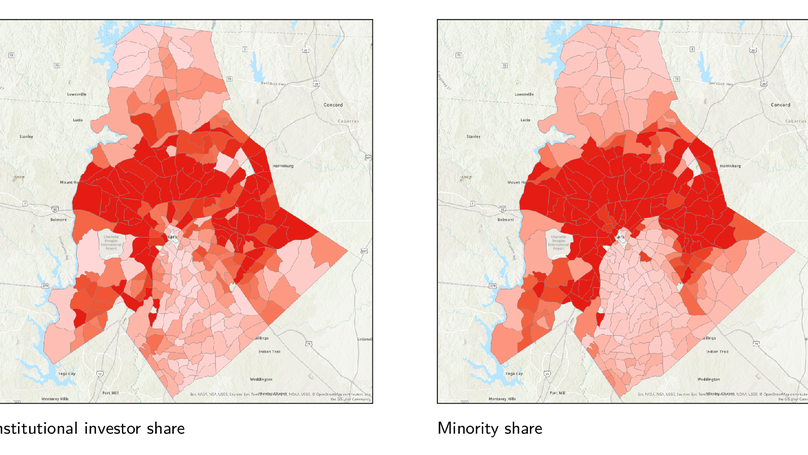
The recent entry of institutional investors in single-family real estate provides a unique opportunity to investigate long-standing questions on the broader mechanics of discrimination. A decomposition of price effects rooted in race suggests the potential existence of “laundering,” where financial intermediaries can arbitrage off the racial penalties previously documented in the literature. This setting allows further exploration of the mechanics of tastes for discrimination, the role of artificial intelligence (AI) in financial intermediaries, and consequences of market power. Furthermore, counterfactuals from a dynamic structural model show how the rise of institutional investors can shape neighborhood demographics. Ultimately, the results suggest that institutional entry and its demographic consequences demand a more nuanced view than previously considered.