“Racial Laundering?” The Neighborhood Consequences of Large-Scale Investor Activity in Single-Family Real Estate
Abstract
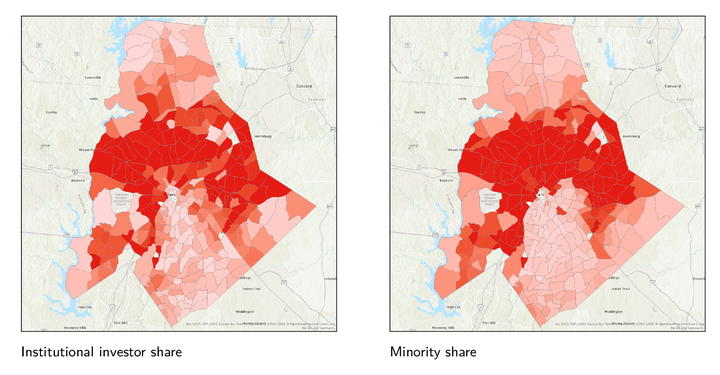
The recent entry of institutional investors in single-family real estate provides a unique opportunity to investigate long-standing questions on the broader mechanics of discrimination. A decomposition of price effects rooted in race suggests the potential existence of “laundering,” where financial intermediaries can arbitrage off the racial penalties previously documented in the literature. This setting allows further exploration of the mechanics of tastes for discrimination, the role of artificial intelligence (AI) in financial intermediaries, and consequences of market power. Furthermore, counterfactuals from a dynamic structural model show how the rise of institutional investors can shape neighborhood demographics. Ultimately, the results suggest that institutional entry and its demographic consequences demand a more nuanced view than previously considered.

Motoyuki (Moto) Yoshihara
PhD Candidate
My research centers around urban economics, particularly housing and land use, through spatial econometric methods and GIS data. I am particularly interested in why people choose to live where they do and their spillover ramifications for others.